
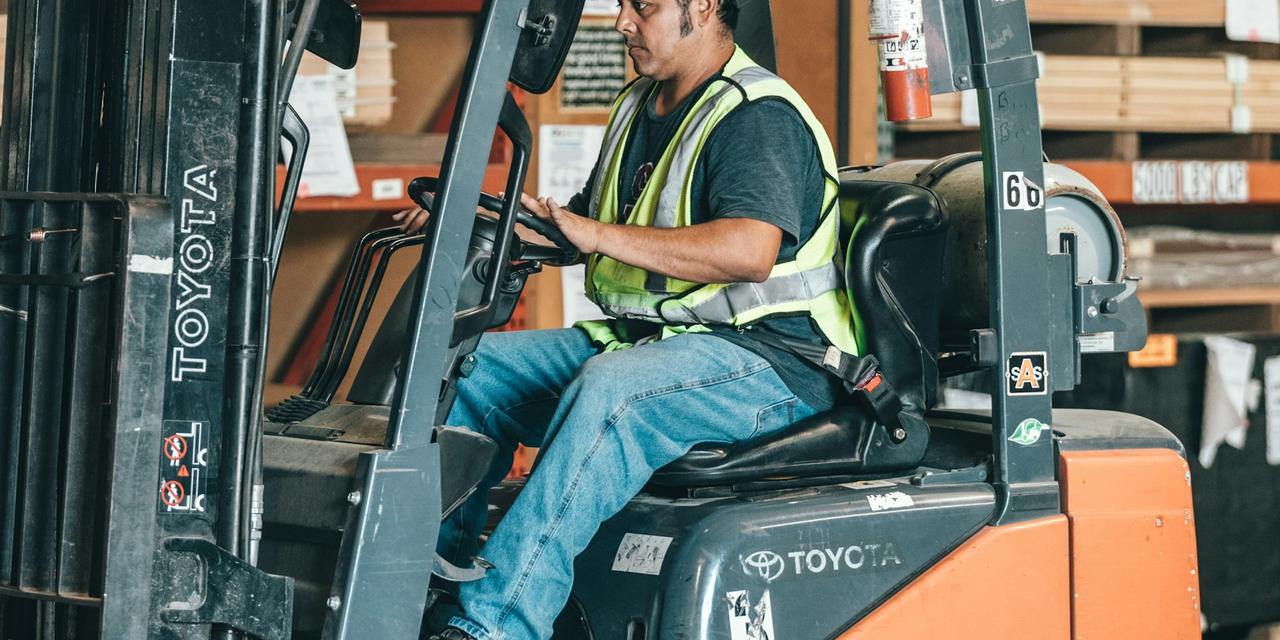
Forklift training and equipment sign-off
Use this to understand what an employer must do before you drive a forklift or another powered truck on its floor. The rule comes from OSHA, and it puts both the training and the sign-off in the employer's hands.
What the OSHA rule requires
OSHA treats forklifts, reach trucks, order pickers and electric pallet jacks as powered industrial trucks. Before anyone operates one at work, the employer must train that person, evaluate their driving and certify that both steps took place.
The training has three parts: formal instruction such as a class or video, hands-on practice under supervision, and an evaluation of how you operate the truck in the actual workplace. It has to cover the specific types of trucks you will drive and the conditions of that building, such as ramps, narrow aisles or dock plates.
Federal child labor rules bar workers under 18 from operating forklifts in most nonfarm jobs, so postings for these roles generally ask for operators who are at least 18. Manual pallet jacks that you push and pump by hand fall outside the powered truck rule.
Each employer still has to evaluate you on its own trucks and site before signing you off, so expect a driving evaluation even with years behind the wheel.
Why an old card may not carry over
A forklift card or certificate from a past job or a training school shows experience, and many employers like to see one. Each employer still has to evaluate you on its own trucks and site before signing you off, so expect a driving evaluation even with years behind the wheel.
Sign-off is tied to the type of equipment. An operator cleared on a sit-down counterbalance forklift still needs training and evaluation on a stand-up reach truck or an order picker that lifts the operator high off the floor. Keep a list of every truck type you have driven so you can describe your experience clearly.
Refreshers and daily checks
OSHA requires an evaluation of each operator at least once every three years. Refresher training is also required after an accident or near miss, when an operator is seen driving unsafely, when someone is assigned a different type of truck, or when conditions in the workplace change.
OSHA also requires each truck to be examined at least daily before it goes into service, and many sites have operators fill in a pre-shift checklist covering the horn, brakes, forks, chains and battery or fuel. A truck with a defect is tagged out of service until it is repaired, and the operator reports it to a supervisor rather than driving it.
What to do this week
- Note every truck type you have driven and where
- Ask which trucks the opening uses
- Ask how the site runs its driving evaluation
- Review the pre-shift inspection items for your truck type
Who to ask
The safety manager or the supervisor who runs equipment training at the site
Remember: Forklift sign-off belongs to the employer and the site, so plan on being trained and evaluated again at each new job.